












Advanced Energy Storage Solutions Embrace Liquid Cooling, Modular Design, and Zero‑Carbon Integration
As renewable energy penetration rises and grid stability becomes a growing priority, energy storage systems are evolving beyond simple battery enclosures. Modern installations demand thermal management that ensures safety and cycle life, compact footprints for urban or industrial sites, and scalable architectures that adapt to changing load profiles. In response, equipment providers are introducing integrated storage platforms that combine intelligent cooling, power conversion, and energy management in a single package.
At the forefront of this trend is the Liquid cooling smart energy storage cabinet, which employs circulating coolant to maintain uniform battery temperatures across all cells. Unlike air‑cooled alternatives, liquid cooling offers superior heat dissipation efficiency, reducing hotspot risks and enabling higher charge/discharge rates without derating. These cabinets typically integrate battery racks, a cooling distribution unit, a fire suppression system, and a local controller that monitors cell voltages, temperatures, and state of charge in real time. The smart management software can adjust cooling output based on ambient conditions and operational intensity, prolonging battery life and lowering auxiliary power consumption.
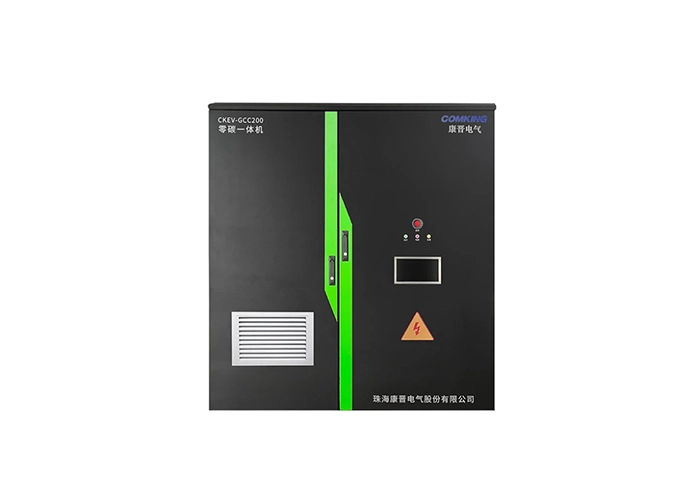
Complementing this is the Zero carbon integrated machine, a term that refers to a pre‑assembled system housing not only the storage batteries and cooling, but also a bi‑directional power conversion system (PCS) and an energy management unit. This all‑in‑one design eliminates the need for separate inverter rooms or external control cabinets, significantly reducing installation complexity and civil engineering costs. The zero‑carbon designation underscores its compatibility with renewable generation—such as solar or wind—and its ability to perform peak shaving, load shifting, and backup power with minimal operational emissions. Many such units also feature grid‑forming capabilities, allowing them to support weak grids or operate in island mode during outages.
For larger‑scale projects that require future capacity expansion, the Modular Liquid Cooling Strong Scalability approach has gained traction. In this architecture, the cooling system and power electronics are built from standardized modules that can be paralleled to increase total energy and power ratings. Each module contains its own liquid‑cooling loop, battery cluster, and local control, enabling independent operation and hot‑swap maintenance. Scalability is achieved by adding modules without redesigning the central infrastructure—an advantage for commercial and industrial users who anticipate load growth or evolving tariff structures. The modular design also simplifies transportation and on‑site assembly, as individual modules weigh less and can be placed in confined spaces.
Zhuhai Comking Electric Co., Ltd. offers a comprehensive range of storage solutions that incorporate these three features. Their liquid‑cooled cabinets are available with capacities from several hundred kilowatt‑hours to multi‑megawatt‑hour configurations, with optional outdoor enclosures rated for harsh environments. The zero‑carbon integrated machines come with pre‑commissioned software that supports common communication protocols (Modbus, CAN, IEC 61850) for seamless integration with building management systems or utility SCADA. For modular systems, the company provides plug‑and‑play connectors and shared coolant manifolds that allow up to 10 modules to be coupled, achieving scalability without compromising thermal performance.
Industry experts highlight that effective thermal management is now a differentiator for storage safety and return on investment. Liquid cooling, when combined with modularity and intelligent control, can reduce total cost of ownership by extending battery throughput and minimising downtime. As more regions set decarbonisation targets, integrated storage platforms like these are expected to become standard components in microgrids, EV charging hubs, and industrial peak‑demand reduction projects. With continued advancements in cooling efficiency and modular electronics, the transition toward resilient, low‑carbon power systems becomes increasingly practical and cost‑effective.